
26 April 2026
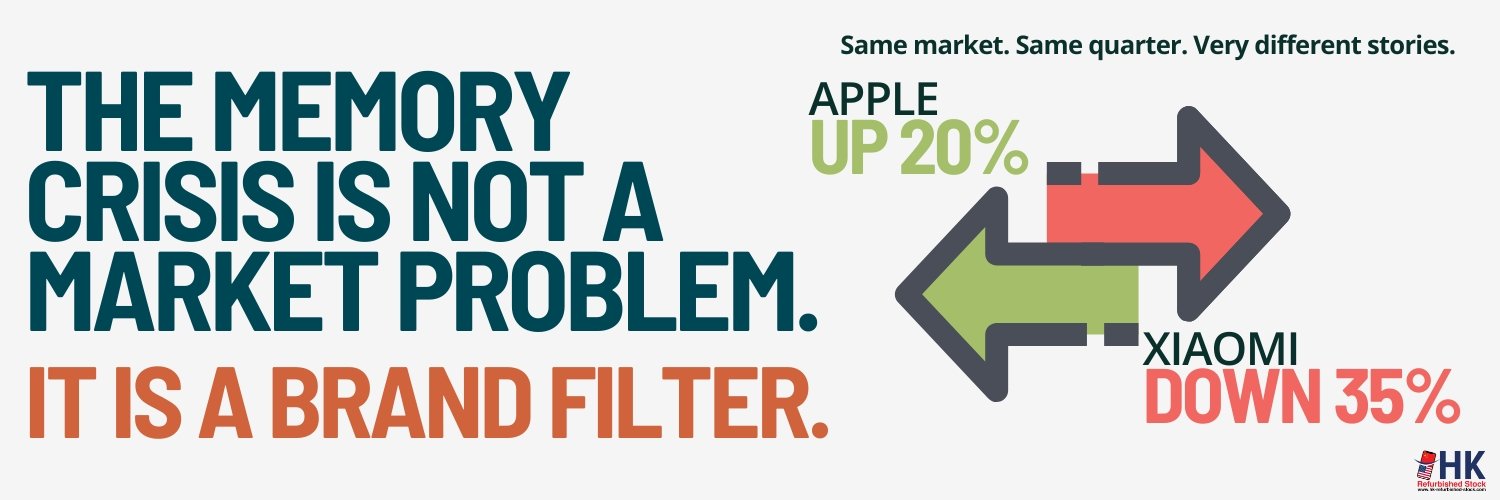
Apple’s iPhone shipments in China jumped 20% in Q1 2026, delivering the strongest growth of any major vendor in the world’s largest smartphone market — even as overall shipments in the country declined 4%, according to data from Counterpoint Research cited by Reuters.
The broader market is under pressure from supply chain disruptions and soaring memory chip costs that have forced most vendors to raise prices. Against that backdrop, Apple’s performance stands out sharply — and carries real implications for businesses operating in the refurbished iPhone market.
If you source wholesale refurbished iPhones, or are looking to enter that market, here is what the data shows and why it matters for your inventory strategy. For a broader view of market conditions, HK Refurbished Stock tracks these trends to help partners make informed sourcing decisions.
The China Smartphone Market in Q1 2026: A Market Under Pressure
China’s smartphone market declined 4% in Q1 2026 — a period hit by supply chain disruptions and the sharp rise in memory chip costs. Most vendors responded by raising prices on budget handsets to protect margins, which dampened demand in the price-sensitive segments that drive the bulk of China’s volume.
Against this backdrop, only two of the major vendors managed to grow shipments: Huawei and Apple. Every other significant player in the market contracted.
Apple’s 20% Growth: Why Chinese Consumers Are Choosing iPhones
Apple finished Q1 with a 19% market share in China, making it the second-largest vendor in the market behind Huawei. The 20% shipment growth represents the strongest performance of any major brand in the quarter.
Counterpoint Research Senior Analyst Ivan Lam attributed Apple’s resilience to a specific dynamic: as rivals raise prices to offset rising chip costs, Apple’s value proposition strengthens relative to the competition. Chinese consumers, Lam noted, recognize that iPhones typically remain functional and maintain value for at least three years — making them a rational long-term purchase even at a higher upfront price point.
This perception of durability and longevity is also one of the core reasons iPhones perform strongly in the secondary market. A device that consumers trust to last three or more years in active use is a device that holds its value through the refurbishment cycle.
Huawei Holds the Top Spot — With a Different Strategy
Huawei retained its position as China’s leading smartphone vendor with a 20% market share in Q1, growing 2% year-over-year. Its growth was driven by strong demand across both its high-end lineup and its budget range — including the Enjoy 90 series — reflecting a portfolio breadth that Apple does not replicate at the lower end of the market.
Counterpoint’s Ivan Lam noted that Huawei could see further shipment growth in Q2, driven by sustained solid demand for its lower-end devices — a segment that Apple does not directly compete in.
The Rest of the Market: Sharp Declines Across the Board
Xiaomi: Down 35%
Xiaomi saw the sharpest decline among major vendors, with shipments falling 35% year-over-year and the brand slipping to sixth place in the market. Counterpoint’s Lam attributed the drop primarily to a high base effect: Xiaomi benefited significantly from aggressive price cuts and government subsidies in Q1 2025, making the year-over-year comparison particularly difficult.
OPPO and HONOR: Modest Declines
OPPO and HONOR each recorded more modest declines — down 5% and 3% respectively — reflecting the broader pressure on mid-range and budget-oriented vendors facing elevated component costs.
Vivo: A Bright Spot
Vivo was the exception among the non-Apple, non-Huawei vendors, recording a 2% increase in shipments. Strong sales during the Lunar New Year holiday period provided the brand with a meaningful volume boost in the quarter.
What Comes Next: More Headwinds Expected in Q2
Counterpoint Research expects further headwinds for China’s smartphone market in Q2 2026. Chinese brands are likely to raise prices further as memory chip costs remain elevated, which will continue to weigh on demand in the price-sensitive segments that account for a large share of China’s total volume.
Apple and Huawei are expected to be relatively better positioned to weather these conditions. Huawei, in particular, may see further shipment growth driven by solid demand for its lower-end devices — a segment where it competes directly with the brands most exposed to cost pressure.
What This Means for the Refurbished iPhone Market
Apple’s strong performance in China — and the broader perception of iPhones as durable, long-value devices — has a direct read-through for the secondary market.
Higher new device prices across the market push more consumers toward refurbished alternatives. As Chinese vendors raise prices on budget handsets to offset chip costs, the price gap between a new mid-range Android and a refurbished iPhone narrows — making refurbished iPhones a more compelling option for a broader group of buyers.
Strong new iPhone shipments drive future secondary supply. A surge in iPhone shipments today means a larger pool of devices entering the secondary market 12 to 24 months from now, as trade-in and upgrade cycles play out.
iPhone’s perceived durability supports secondary market value. The same quality perception that drives new iPhone purchases in China — a device consumers expect to last three or more years — is what makes refurbished iPhones consistently strong performers in the secondary market. Explore our current wholesale refurbished iPhone inventory to see available stock.
Key Takeaways
- China’s overall smartphone market declined 4% in Q1 2026, pressured by memory chip shortages and supply chain disruptions.
- Apple grew 20% YoY — the strongest performance of any major vendor — finishing with a 19% market share in second place behind Huawei.
- Huawei retained the top spot with 20% share, growing 2% YoY on the back of broad portfolio demand.
- Xiaomi fell 35% YoY, slipping to sixth place; OPPO and HONOR declined 5% and 3% respectively; Vivo grew 2%.
- Further price increases from Chinese vendors expected in Q2, with Apple and Huawei likely to outperform.
- Rising new device prices and iPhone’s strong durability perception are structural tailwinds for the refurbished iPhone market.
Ready to Stock Refurbished iPhones?
With new device prices rising across the market and demand for quality refurbished alternatives growing, now is the time to position your inventory. HK Refurbished Stock supplies wholesale refurbished iPhones to resellers, e-commerce sellers, and secondary market businesses worldwide.
Contact our team to discuss availability, grades, and wholesale pricing.